
SECURITYWEEK – The most successful breaches in 2026 are likely to exploit trust, not vulnerabilities. All courtesy of artificial intelligence (AI).
We’re going to explore how AI-assisted social engineering attacks might evolve from 2026 onward, and how cybersecurity could, and perhaps should, adapt to meet the new challenge. The threat is no longer against individuals, nor even businesses, but entire cultures.
Through 2026 and beyond, the quality of deepfake social engineering will continuously improve. Criminal professionalism will also improve. Consider SheByte, a new phishing-as-a-service (PhaaS) platform available on the criminal underground (with subscriptions costing around $200).
“It’s a phishing kit that incorporates AI-generated templates to automate the creation and management of phishing websites at scale. These toolkits are becoming more accessible, and we expect this trend to intensify throughout 2026 because criminal operators are continuing to refine and commercialize these platforms,” explains Kevin Gosschalk, founder and CEO at Arkose Labs.
He continues, “Beyond phishing sites, there are sophisticated toolkits designed specifically for fraud that can perfectly spoof voice and video. These aren’t consumer AI tools like ChatGPT being misused; these are purpose-built criminal products engineered for deception.”
 As design director at Cookerly, Tim serves as the creative lead in the development of branding campaigns, print collateral and digital media for clients across a broad range of industries, including consumer, professional services, healthcare and technology.
 As a senior vice president at Cookerly, Mike Rieman is a strategic communications leader specializing in media relations and reputation management. With a proven track record of securing high-profile placements in top-tier outlets such as The New York Times, The Wall Street Journal, CNN and USA Today, he excels at crafting compelling narratives that resonate across print, broadcast and digital platforms.
 Mike Touhill is vice president at Cookerly Public Relations, where he helps lead traditional, social and digital media programs for B2B and B2C clients in packaging, telecommunications and technology, among other industries. As a communication leader, he develops and executes public relations strategy, provides proactive and reactive counsel to C-level executives and secures earned media coverage for client initiatives and product.
 Andrew Agan is a vice president at Cookerly Public Relations, overseeing the agency’s internship program and leading media relations, content strategy and social media initiatives. He provides counsel and executes campaigns for clients across various sectors, including finance, healthcare, hospitality, technology, automotive and many others. Andrew excels at crafting compelling stories and building media relationships, resulting in clients being featured in notable outlets such as CNBC, Associated Press, Business Insider, Fox Business, HBO, Inc. Magazine, Sirius XM, The Wall Street Journal and USA Today, among others.

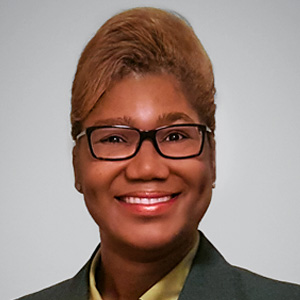 As vice president of Cookerly, Sheryl Sellaway uses her extensive corporate communications background to lead consumer PR efforts, deliver strategy for marketing programs and share expertise about community initiatives.