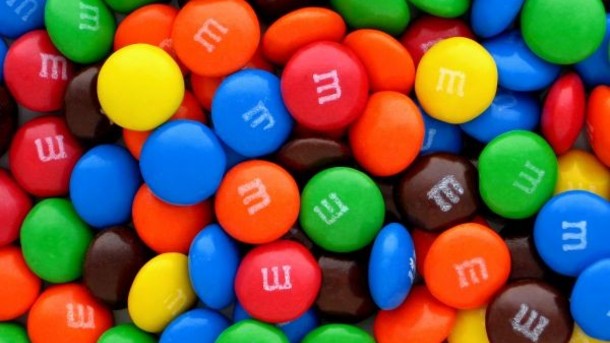
Melts in your mouth, not in your hands. We didn’t invent chicken, just the chicken sandwich. Just Do It. Sound familiar? You’ve probably heard these slogans many, many times and can rattle off the companies to whom these slogans belong without skipping a beat: M&M’s, Chick-fil-A and Nike.
Marketing slogans are a core element of a company or product’s brand. They essentially define what the product is or what the company does. A slogan – also called a tagline – is a textual representation of a company’s brand and often linked with a visual representation of that brand, or the product or company symbol.
When you read or hear, “Melts in your mouth, not in your hands,” what symbol comes to mind? A small, brightly-hued, chocolate candy with a little “m” on it. Or, “Just do it” is associated with a picture that looks something like a cross between a curly checkmark and an incomplete, tilted canoe. I’m describing, of course, the infamous Nike “swoosh” logo. (This image and name, by the way, are derived from the Greek goddess, Nike or Niki, which means “victory” in Greek. The swoosh is loosely based on her wing, since she is referred to as the “winged goddess of victory”).
In public relations, taglines, slogans and symbols are very important in helping to create a brand’s image and develop brand equity. Creating a slogan and for a company, product or service must support the key objectives, the strategies and tactics, which in turn need to tie in with the overall theme and goal of the company, product or service. It’s vital that the messaging be consistent and unified across all PR and marketing channels. Communicating about and protecting the brand are connected to the brand’s slogan, its logo, its website, its image.
According to the Tagline Guru blog, the top ranked taglines meet the criteria for longevity, equity (becoming synonymous with a company or product), memorability (influence on culture & media) and originality.
Conversely, a poorly constructed tagline can be bad for business and create a negative image of your brand or product. Examples of bad taglines identified by the Tagline Guru, are typically confusing, awkward, vague and underwhelming:
Excellence through total quality. (Ames Rubber)
Distilled in hell. (Bacardi Spice)
We want you to live. (Mobil)
We’re chicken. (Tyson)
Why fool around with anyone else? (FedEx)
Um….yeah, I’d say these are confusing, vague and awkward.
So a few tips when brainstorming a slogan:
- Think about the top keywords associated with your campaign, product or company.
- What would someone type in to a search engine to find your company?
- What are some strong action verbs that describe your product or company?
- Test your slogans with people unfamiliar with your company and see if they can guess what your company does or makes.
 As design director at Cookerly, Tim serves as the creative lead in the development of branding campaigns, print collateral and digital media for clients across a broad range of industries, including consumer, professional services, healthcare and technology.
 As a senior vice president at Cookerly, Mike Rieman is a strategic communications leader specializing in media relations and reputation management. With a proven track record of securing high-profile placements in top-tier outlets such as The New York Times, The Wall Street Journal, CNN and USA Today, he excels at crafting compelling narratives that resonate across print, broadcast and digital platforms.
 Mike Touhill is vice president at Cookerly Public Relations, where he helps lead traditional, social and digital media programs for B2B and B2C clients in packaging, telecommunications and technology, among other industries. As a communication leader, he develops and executes public relations strategy, provides proactive and reactive counsel to C-level executives and secures earned media coverage for client initiatives and product.
 Andrew Agan is a vice president at Cookerly Public Relations, overseeing the agency’s internship program and leading media relations, content strategy and social media initiatives. He provides counsel and executes campaigns for clients across various sectors, including finance, healthcare, hospitality, technology, automotive and many others. Andrew excels at crafting compelling stories and building media relationships, resulting in clients being featured in notable outlets such as CNBC, Associated Press, Business Insider, Fox Business, HBO, Inc. Magazine, Sirius XM, The Wall Street Journal and USA Today, among others.

 As vice president of Cookerly, Sheryl Sellaway uses her extensive corporate communications background to lead consumer PR efforts, deliver strategy for marketing programs and share expertise about community initiatives.