

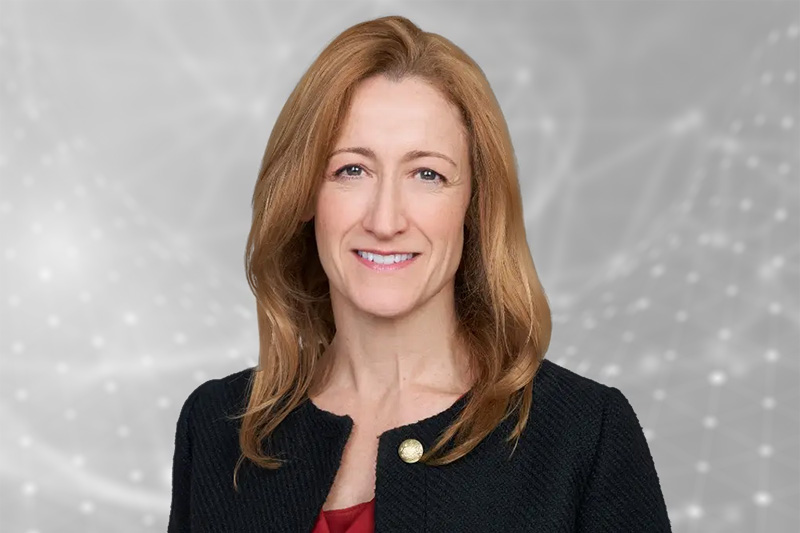
CHIEF EXECUTIVE MAGAZINE – While most CEOs have a clear sense of what AI can do for their business, far fewer have worked out what it’s doing to their business, specifically the risks they carry. Every AI-driven decision, automated process and customer-facing chatbot adds exposure, from model failures to deepfakes and synthetic identities. Hiscox USA CEO Mary Boyd says the risk is changing shape, yet her own company’s data suggests most leaders haven’t caught up: 77 percent of U.S. small businesses are underinsured.
Boyd started as an actuarial trainee at Chubb and spent more than 30 years in the industry, at Chubb, The Hartford and Plymouth Rock, before taking the helm at Hiscox USA in 2024. She sees AI from both sides: as a tool her company is scaling carefully, and as a new category of risk it has to underwrite. In the following interview, she talks about where speed creates advantage and where restraint does, the exposures leaders are missing, and why moving from operator to leader is “a change in kind.”
Hiscox is scaling AI across the business, but has taken a measured approach, emphasizing governance, training and human oversight. At a time when many organizations feel pressure to move quickly, how do you decide where speed creates competitive advantage and where restraint creates long-term value?
The pressure to move fast on AI is real. But speed, technique and discipline aren’t opposites. They are the basis of agility, innovation and high performance. The business leaders and coaches alike, who get this right treat them as complementary, and the skill is knowing when each is required.
 With more than two decades of experience in public relations and journalism, Mike is a strategic communications leader who focuses on media relations and reputation management.